Seasonal stories / NINEHOUND JOURNAL
Lan Xiang Ru Gu: a “hidden dragon” comeback from 4.9% to 42.6%
How does a drama with a 4.9% viewing share on its first day climb to 42.6% just over ten days later? That curve brings to mind Qian’s movement from “Hidden dragon: do not act” to “Flying dragon in the heavens”: make the work substantial, then give it time to reach more people. Here the line texts offer a metaphor for accumulated creative effort, not an explanation of what caused the ratings.
Article
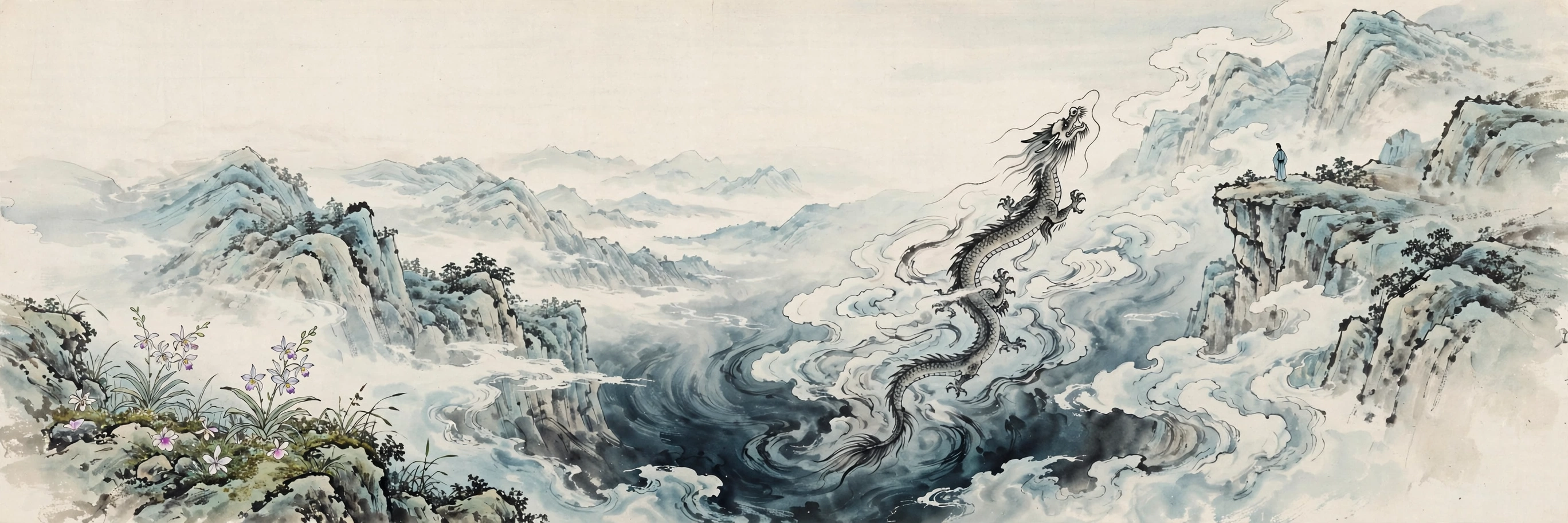
How does a drama with a 4.9% viewing share on its first day climb to 42.6% just over ten days later? That curve brings to mind Qian’s movement from “Hidden dragon: do not act” to “Flying dragon in the heavens”: make the work substantial, then give it time to reach more people. Here the line texts offer a metaphor for accumulated creative effort, not an explanation of what caused the ratings.
First, separate the measures. Viewing share, an individual platform’s popularity index, and television ratings cannot be combined into one figure. According to a bylined Jinyang.com report on September 30, Lan Xiang Ru Gu launched simultaneously on Tencent Video and CCTV-8 on September 11. Its first-day Yunhe share was 4.9%; just over ten days later, its daily share reached 42.6%, while Tencent Video’s internal popularity index exceeded 33,000. We use only the figures explicitly stated in that report, without adding claims of an annual championship or all-time record.
This slow start and subsequent rise can be read metaphorically through Qian’s six lines. The initial nine, “Hidden dragon: do not act,” resembles the stage when a 4.9% opening share means the work is still little seen. Nine in the second place, “Dragon appearing in the field; favorable to see the great person,” suggests entry into the audience’s view. Nine in the third, diligent throughout the day and watchful at dusk, can remind creators to keep refining their work and remain alert. Nine in the fourth, “Perhaps leaping in the depths,” suggests that wider recognition is still uncertain. Nine in the fifth, “Flying dragon in the heavens,” can describe the leap to the reported 42.6%. These are metaphors for reading the drama; each line cannot be forcibly assigned to a particular day’s figure.
The production itself also involved sustained diligence. The same report says the crew spent eight months constructing more than 25,000 square meters of real garden sets. The adaptation removed the original novel’s advantage of memories from modern life, leaving its characters to survive within the conditions of a secluded household. Such painstaking work is accumulation during the hidden-dragon stage. Borrowing the line imagery, what you do while hidden affects how far you can go when you rise.
The limits must be clear. These lines concern timing and position, not a template of destiny. Content quality and patience are the parts of this comeback others can try to reproduce; release timing, competitors, and audience mood cannot be copied as a package. Equally relevant is the top nine, “Overreaching dragon: regret.” After attention rises, creators must still preserve quality and handle differing opinions. For viewers, the chief lesson may be methodological rather than divinatory: worthwhile things often begin quietly.
Qian’s final statement also deserves a close reading: “Use of the nines: a host of dragons without a head; auspicious.” The report specifically praises the drama’s patient treatment of its supporting characters. In this setting I prefer to read the “host of dragons” as the combined work of all a production’s parts: the central plot must stand, and supporting characters need circumstances of their own. The metaphor reminds creators that strength often comes from the whole, rather than a single name or trending topic.
Return to “Overreaching dragon: regret.” Rising popularity brings a test of how to retain attention. The Image commentary says fullness cannot last. Applied today, it warns against treating a present high point as a permanent position. Holding a popularity figure is difficult; preserving patience with characters and settings is more worthwhile. Numbers change, but the fundamentals of making the work must continue.
For viewers, the largest lesson is patience rather than fate analysis. When the opening-day share was 4.9%, declaring the drama a flop was easy; giving good work that develops slowly more time was harder. Qian’s six lines concern more than ascent: every stage counts. Eight months building physical sets and the decision to remove the rebirth premise were work planted during the hidden stage. The reported 42.6% just over ten days later brought that accumulation more attention, but one popularity figure cannot establish the causal effect of every creative decision. The same applies beyond watching dramas: do not demand a flying dragon’s outcome while still doing a hidden dragon’s work.
Sources and further reading
- Jinyang.com, “Decoding Lan Xiang Ru Gu, Part 2: A phenomenal Guangdong production, at last!” by Gong Weifeng (Sohu republication) ↗
- Zhouyi: the Qian hexagram (Wikisource received text) ↗
The article’s views and source references are provided in the text and the links above.