Two guides for the tricky boundaries
Lunar New Year, Li Chun & Midnight: Which Boundary? ↗
NINEHOUND · FREE TOOLS
Explore yourself, bring a question, check a date or make something to keep. 81 tools, ready in your browser.
81 free tools
No matching tools. Try another word or choose All tools.
Find your Chinese zodiac animal and year element by birth date, using Lunar New Year rather than January 1. See the calendar rule and examples.
Find your animalConvert Gregorian and Chinese lunar dates in both directions. Identify leap months and check birthday dates with clear calendar conventions.
Convert a dateCompare traditional Chinese nominal age (xu sui) with completed Gregorian years. Choose a comparison date and see the Lunar New Year rule.
Compare your agesConvert a 24-hour clock time to one of the twelve Chinese double hours. See the branch, animal and exact clock interval, including midnight.
Find your double hourFind a Chinese lunar birthday in a selected year. Choose how to handle a missing leap month or a month with only 29 days.
Find this year’s birthdayCalculate the 24 Chinese solar terms for a year and display their times in an IANA time zone. Includes Li Chun, equinoxes and solstices.
Show the 24 termsFind Chinese New Year dates from 1901 to 2099 and the associated zodiac animal. See nearby years and the difference from Li Chun.
Find New Year’s DayFind the leap month in a Chinese lunar year and see all 12 or 13 months with Gregorian start dates and 29- or 30-day lengths.
Show lunar monthsConvert local clock time to apparent true solar time using longitude, historical IANA time zones and the equation of time. Handles DST gaps and folds.
Correct the clock timeExplore an annual Chinese zodiac outlook board based on traditional six-harmony, three-harmony and clash relationships. Save a shareable image.
Read the year’s themesNights elapsed or dates on the calendar? Choose whether the end date counts. The default interval excludes the end date. Inclusive counting adds one, so identical dates return zero or one.
CalculateWhat date is 100 days later? Negative numbers work backwards. The start is day zero. Positive integers move forward; negative integers move backwards. Weekends and holidays count.
CalculateHow many Mondays through Fridays fall inside your date range? Only Saturdays and Sundays are excluded. Both endpoints count by default. No country’s holiday or make-up workday schedule is applied.
CalculateWhat weekday was that date, and which dates share it in the same month? Uses the Gregorian civil date with no time-zone conversion. The monthly list includes the entered date.
CalculateJanuary 1 can belong to the previous ISO week-year. Check both labels. Weeks begin on Monday. Week 1 contains January 4; the ISO week-year can differ from the Gregorian year.
CalculateTurn day 100 into a date, or a date into its day number. Leap years matter. January 1 is day 1. Ordinary years end at 365 and leap years at 366. Invalid day numbers are rejected.
CalculateView a whole month with lunar dates beside Gregorian dates. Select a Gregorian month for a daily table of weekdays and lunar dates. Leap lunar months are marked explicitly.
CalculateA February 29 does not imply a lunar leap month. Check the Gregorian year. A Gregorian leap year is divisible by 4 except century years not divisible by 400. The result lists all twelve month lengths.
CalculateFind the next occurrence of a birthday or anniversary, including today. Uses the Gregorian month and day. For February 29 choose leap years only, February 28, or March 1 in ordinary years.
CalculateWhen is your 10,000th elapsed day? Find the less obvious milestones. Birth is day zero for elapsed-day milestones. Age milestones use Gregorian anniversaries with your selected February 29 convention.
CalculateFind Gregorian dates for Dragon Boat, Mid-Autumn and other lunar festivals. Lists seven festivals in the selected lunar year, using ordinary lunar months. Leap months do not duplicate festivals.
CalculateHow long until the next listed lunar festival—even across Lunar New Year? Finds the next of seven listed lunar festivals, including an occurrence today. Remaining time is counted in civil dates.
CalculateRead stem-branch labels as calendar notation before treating them as a chart. The year changes at Lunar New Year. The day label follows the entered civil date with a midnight boundary. No solar-term month or hour pillar is computed.
CalculateA record says “Jia-Zi year”. Which years could that mean? The stem-branch cycle repeats every 60 years. Results show matching lunar years and their New Year boundaries within 1901–2099.
CalculateWhich stem-branch pair corresponds to “Metal in the Sea” and other Nayin labels? Looks up the traditional Chinese Nayin label for a valid sexagenary pair using lunar-javascript’s fixed mapping. Chinese terms are preserved.
CalculateNew York can have 1:30 twice in one morning. Fixed offsets miss that detail. Enter a local date, 24-hour clock time and IANA zone. Repeated clock times require an occurrence choice; skipped times are rejected.
CalculateHow long did it really take? Compare two local timestamps on one timeline. Resolves each local timestamp separately before subtracting UTC instants. Daylight-saving changes can make clock-face subtraction wrong.
CalculateOne degree of longitude corresponds to four minutes of mean solar time. Subtracts the origin longitude from the target and multiplies by four minutes. East is positive; a positive result means the target’s mean solar clock is ahead.
CalculateTurn a UTC clock reading into an astronomical Julian Day number. Enter a Gregorian UTC date and time. Julian Day integers turn over at noon. January 1, 2000 at 12:00 UTC is JD 2451545.0.
CalculateThat long number may be seconds or milliseconds. Choose the unit explicitly. Unix time counts from January 1, 1970 at 00:00 UTC. Negative integers represent earlier dates. The unit is never guessed.
CalculateCreate a personal moon keepsake from your birth date and city. Compare two real lunar phases and save a free illustrated card, with unknown birth times clearly marked.
Find my moonExplore two life choices with an interactive decision table. Set your own priorities, mark unknowns, test a change of mind and save an action card. Free and private.
Lay out my choicesPlay with six yin and yang lines to explore all 64 I Ching hexagrams. Compare changing lines, nuclear, complementary and reversed structures, then save your diagram.
Change a lineDraw your own ridgelines and compose a layered ink landscape. Change the ink, add a title, undo a stroke and save a print. Free, local and keyboard accessible.
Draw a mountainCreate an original modern typographic stamp from one to four Chinese characters or up to ten English letters. Try red or white lettering and round or square forms, then save a personal print.
Make my markExplore twelve original palettes inspired by seasonal landscapes. Edit five swatches, inspect WCAG contrast, copy HEX values and export an editorial colour folio.
Find my coloursDraw a seed motif and watch it become a repeating textile pattern. Explore mirrors, quarter-turns, spacing and colourways, undo marks and export a print.
Weave a patternAn illustrated architectural courtyard with real solar altitude, azimuth and gnomon shadows. Choose a city, date and local clock time; save your courtyard as a PNG.
Borrow a little sunlightCompose a dark rain window with moving droplets, three colour moods and optional generated rain sound. Adjust the density and volume; save a real PNG of your scene.
Let it rainA finely ribbed paper lantern follows your chosen inhale and exhale pace. Adjust the seconds, start, pause or reset; a reduced-motion text mode and PNG still are included.
Light one gentle breathHang up to six handwritten worries on a sunlit clothesline. Choose what you can act on, what needs a conversation, and what can wait. Keep a picture of your own arrangement.
Give a worry some airPlace up to eight people around your own star. Choose each person’s distance, add an intention, and make a small map of the relationships you want to tend.
Place your peopleChoose up to six dated memories and arrange them on a flowing paper scroll. Time sets their positions; your own words give them meaning. Save the moments you choose to keep.
Unroll a memoryCompose an original digital jade pendant with three shapes, three mineral colours, cloudlike veins and a movable light. Name it and save the current high resolution PNG. Free and local.
Compose a jade pendantMix polished jade, black onyx, amber and fine wood bead by bead. Change count and diameter, inspect a geometric circumference estimate and save your current bracelet composition.
Compose a bead braceletCompose a shaded ceramic vessel with three silhouettes and four original glazes. Change its crackle texture, title it and save a 1200 × 1000 PNG, entirely on your device.
Compose a glazed vesselOpen and close an original bamboo folding fan, add a short inscription and save its current folded paper composition. Keyboard and touch controls, local rendering and free PNG export.
Open a folding fanCompose the relief side of an original bronze mirror with three geometric patterns, adjustable patina and raking light. Save the current high resolution canvas. Free, local and accessible.
Compose a bronze mirrorCreate an original ceramic repair composition inspired by Japanese kintsugi. Change the glaze, fracture layout, gold seam width and repair progress, then save the current canvas locally.
Compose a golden repairCast three independent digital coins six times, build a hexagram from the bottom, inspect changing lines and keep a bronze-textured PNG of the current cast.
Cast the first lineExplore Earlier and Later Heaven trigram directions on an original textured brass reference plate. Select any direction, inspect its name and image, and save the arrangement.
Turn to a directionExchange nine carved stone tiles to solve a Luoshu magic square. Check all rows, columns and diagonals, retry a puzzle, reveal the classic arrangement and export your table.
Arrange the nine stonesArrange five polished material objects through editable weights. See relative shares and learn the traditional generating and controlling cycles without a personality or fortune reading.
Compose the material gardenSet a 5–60 minute incense-inspired timer with pause, resume and reset. Watch a textured powder trail on an original glazed plate and keep the current state as a PNG.
Begin an intervalWrite a private wish on an original lotus lantern with layered petals, candlelight and a broken water reflection. Adjust the warm light and choose still or gently moving water and save the current canvas as a PNG.
Light a wishCompose an original Japanese dry-garden study. Move textured stones, add up to nine stones, rake sand with a pointer or keyboard, undo gestures and save the current arrangement.
Rake a small gardenDrop digital ink onto textured paper and watch pigment spread. Change water content for future drops, place ink with touch or keyboard, reset the sheet and save the current wet-ink study.
Watch ink spreadSet a custom 1–3600 second tea timer beside an original glazed cup on wet wood. Start, pause, reset the current pour and keep a timestamped history for this session.
Time a pourChoose a date, calculate its actual solar term at Shanghai noon, add an inscription and save an original botanical flower folio on textured paper.
Compose a flower folioSet your own words and signature on tactile paper with an original botanical margin and a shaded brush. Choose vertical or horizontal typography and export the actual text as PNG.
Keep a few wordsRead the day stem for a civil birthday, then explore its element, polarity and specific image through a jade keepsake.
Read your day stemCompare a chosen day stem and counterpart through the real generating, controlling and polarity rules of the ten gods.
Compare two rolesOpen a carved box of a branch’s actual hidden stems, keeping primary order and each role relative to your day stem.
Open the layersMap a stem and branch to the correct twelve-growth stage, with yang forward, yin backward and an explicit earth-follows-fire convention.
Find a cycle stageUse exact integer arithmetic to derive upper and lower trigrams, a moving line, a relating figure and the inner mutual figure.
Give two numbersBuild six lines one deliberate step at a time with the exact traditional yarrow-outcome probability model, visibly distinct from three coins.
Cast one lineSelect one of 64 hexagrams and compare its mutual, opposite and reversed figures with their own texts and reflection lenses.
Turn the mirrorLocate the exact solar-term month in a recorded date, time and timezone, then read all five seasonal roles relative to a chosen stem.
Read the solar seasonA birthday is a date. Your Sun is a precise place in the sky. Calculate locally, read the method and keep a textured night-sky artwork.
Find your solar archetypeThe same birthday can hold two different Moons. Give yours its own time. Calculate locally, read the method and keep a textured night-sky artwork.
Read your lunar signWhat catches your eye—and what makes you stay? Let Venus open the question. Calculate locally, read the method and keep a textured night-sky artwork.
Explore your Venus signA planet can appear to turn back. Your plans still belong to you. Calculate locally, read the method and keep a textured night-sky artwork.
Inspect planetary motionFive worlds. Ten conversations. Which one deserves your attention? Calculate locally, read the method and keep a textured night-sky artwork.
Explore five-world aspectsAn old hour is not always sixty minutes. Let sunrise set the rhythm. Calculate locally, read the method and keep a textured night-sky artwork.
Find the day’s unequal hoursDraw one of 22 original Major Arcana cards with secure browser randomness. Choose upright-only or optional reversals, explore a specific symbolic meaning and keep a richly illustrated PNG.
Draw one cardDraw three distinct illustrated Major Arcana cards for situation, tension and next step. Read the modern spread’s positions and card-specific prompts, with optional reversals and a labelled PNG.
Lay out three cardsExplore self, other, shared ground, friction and care with five distinct illustrated Major Arcana cards. Read questions that respect both people’s agency, then export your modern spread.
Open the relationship spreadCalculate a component-based Life Path number from a Gregorian birthday, preserving 11,22 and33. Read every reduction and a number-specific reflective theme, then save an engraved numeral artwork.
Calculate the life pathAdd your birth month and day to a chosen calendar year, reduce to 1–9 and inspect a nine-year map. Read the exact working and a practical symbolic focus, then export the year’s metallic seal.
Calculate the personal yearBuild the four Western numerology Pinnacles from a Gregorian birthday, see master-number treatment and exact inclusive age intervals, select a completed age and keep four engraved numeric medallions.
Calculate four pinnaclesBrowse lunar dates, stems and branches, solar terms and traditional Yi/Ji. Separate NineHound everyday prompts, date navigation and a downloadable calendar card.
Open today’s almanacSTAY A LITTLE LONGER
NEW AT NINEHOUND / PLAY. KEEP. GIVE.
The night you arrived, the Moon had a shape. Find it again. Keep it for yourself, or place it beside someone else’s.
Find my moon →02 / CHOICESYou can picture both lives. The difficult part is choosing which price you are willing to pay.
Lay out my choices →03 / CHANGESix lines. One small change. Put a finger on the I Ching and see what moves.
Change a line →BaZi, the I Ching, astrology, tarot and numerology. Bring a little curiosity.
Enter the reading room ↗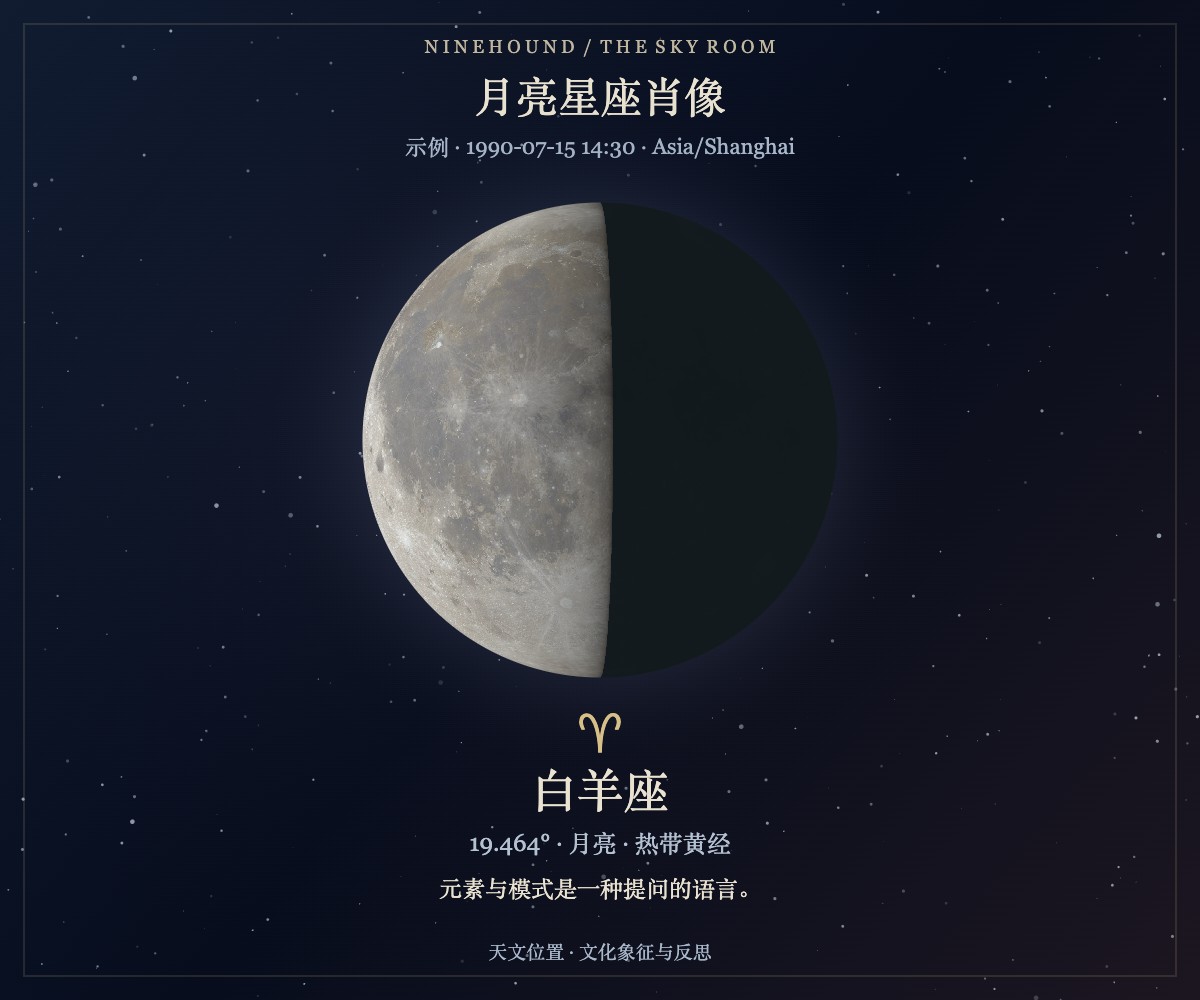
Turn the light in jade. Arrange a string of beads. Let an ember keep the time. Step inside the object room.
Explore the collection →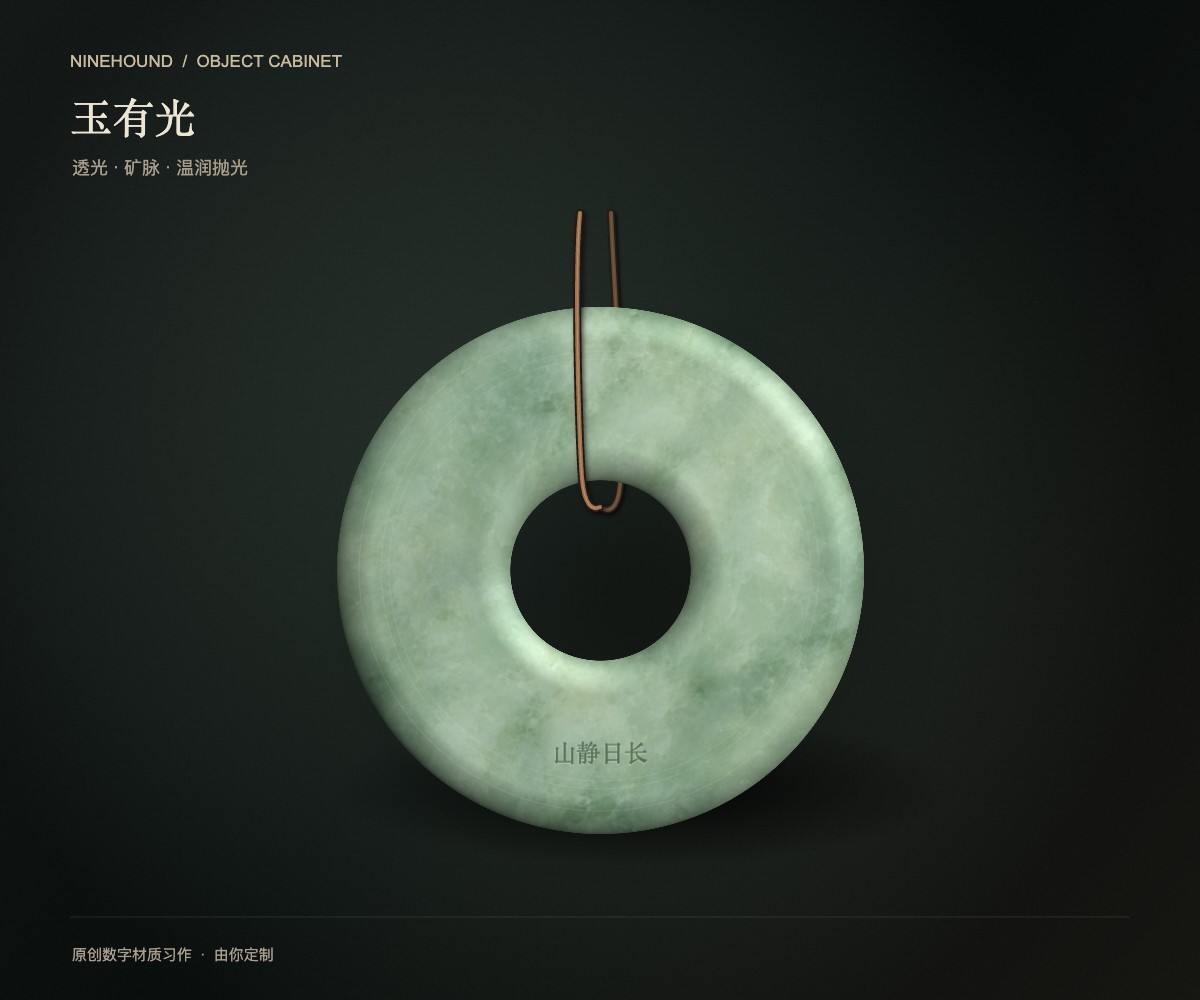
Draw a landscape, compose a personal seal, or listen to a window of rain. Ten small places to make something your own.
Explore the ten new experiences ↗Lunar New Year, Li Chun & Midnight: Which Boundary? ↗
Explore NineHound’s tools, source texts and methods.
About NineHound & our methods